See the concept, not just the words
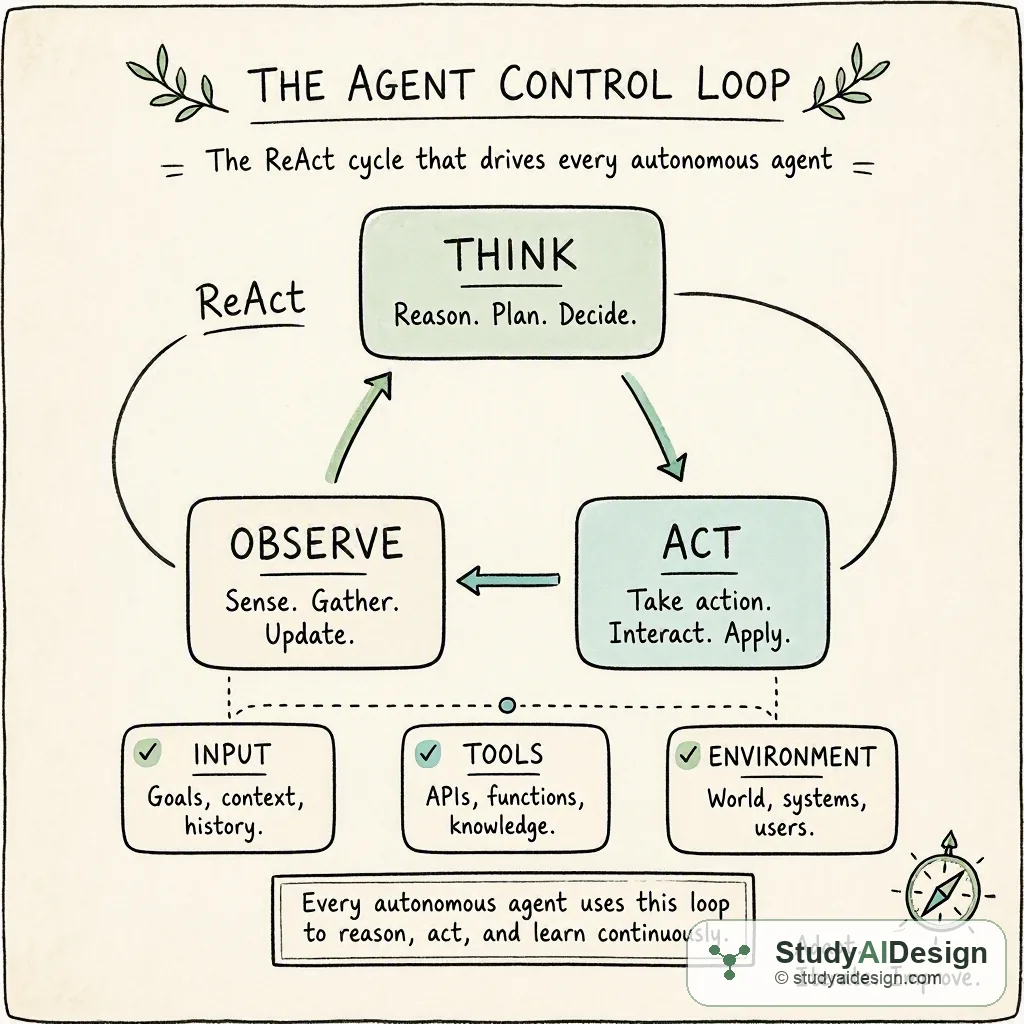
A sample from the agents chapter.
Study. Practice. Walk in ready.
Clear explanations, diagrams, and real interview questions on RAG, agents, inference, and evaluation. Written to go deep, not skim.
Start anywhere. Each topic is self contained, with diagrams and interview questions.
foundations
A ground-up tour of tokens, embeddings, attention, and why transformers scale.
model landscape
A practical framework for navigating the 2026 model landscape and picking the right model for your use case, budget, and latency requirements.
training and adaptation
How to adapt pretrained language models to specific tasks using full fine-tuning, LoRA, instruction tuning, and preference alignment, and when each approach is the right tool.
inference optimization
How LLM serving works under the hood, and the techniques that make it fast, cheap, and scalable in production.
prompting and context
How to structure prompts and fill the context window so models produce reliable, grounded, and cost-efficient outputs.
retrieval
Why retrieval-augmented generation works, and how to build a pipeline that actually grounds answers.
agents
From single LLM calls to autonomous agents: planning, tool use, memory, and the control loop.
memory and state
How AI systems store, retrieve, and manage information across tiers, from the context window to persistent knowledge stores.
reliability and safety
How to build AI pipelines that fail gracefully and refuse to produce harm, from input guardrails to circuit breakers to ensemble verification.
evaluation and observability
How to measure, monitor, and improve LLM system quality from offline eval sets through production observability.
ai design patterns
A catalog of recurring architectural patterns for LLM systems, with tradeoffs, failure modes, and guidance on when to combine or avoid each.
Built to help you pass the technical screen and system design rounds.
Every topic goes past the summary into tradeoffs, failure modes, and worked examples you can defend in a panel.
Each concept comes with a diagram, so the mental model sticks instead of a wall of text.
Each chapter ends with real interview questions and model answers, so you practice retrieving, not just reading.
The material tracks how production AI systems are actually built today, not how they looked years ago.
A sample from the agents chapter.
Feedback from engineers preparing for AI system design interviews.
The interview questions at the end of each chapter were the closest thing to my actual onsite. I stopped memorizing and started reasoning, and it showed in the panel.
I had read about retrieval a dozen times and still could not draw it. The diagrams here finally made the whole pipeline click in one sitting.
Most resources stay at the surface. This one explains why each choice is made, which is exactly what staff interviews push on.
The inference optimization chapter alone changed how I talk about serving cost in design rounds. Concrete numbers, no hand waving.
Clear, current, and honest about tradeoffs. I used it to prep for two AI infra interviews and felt ready for both.
The reliability and evaluation chapters are things I now reference at work, not just for interviews. That is rare for free material.
Engineers and practitioners preparing for AI system design interviews, and anyone who wants a clear working model of how these systems fit together.
No. Everything is open and free to read.
Past the summary. Each topic covers tradeoffs, failure modes, and a worked example, then ends with interview questions and model answers.
Yes. It tracks how production AI systems are built today and is revised as the field moves.